
🌙 Mala by the Bedside — A Simple Habit That Saved My Nana Ji from Sleepless Nights
There’s a moment so many of us quietly dread — that sudden awakening in the middle of the night. ⏰
You open your eyes, look at the ceiling… 2:47 AM. And then it happens. Your thoughts start walking, then running, then sprinting. A small worry becomes a bigger one, a tiny irritation becomes a full movie in your mind. Before you know it, dawn is near and rest has slipped away completely.
It’s easy to blame modern life — screens, stress, late dinners, loud minds. But sleeplessness is not new. The difference is: our grandparents handled it differently.
And my Nana Ji had a way I’ll never forget. 🤍

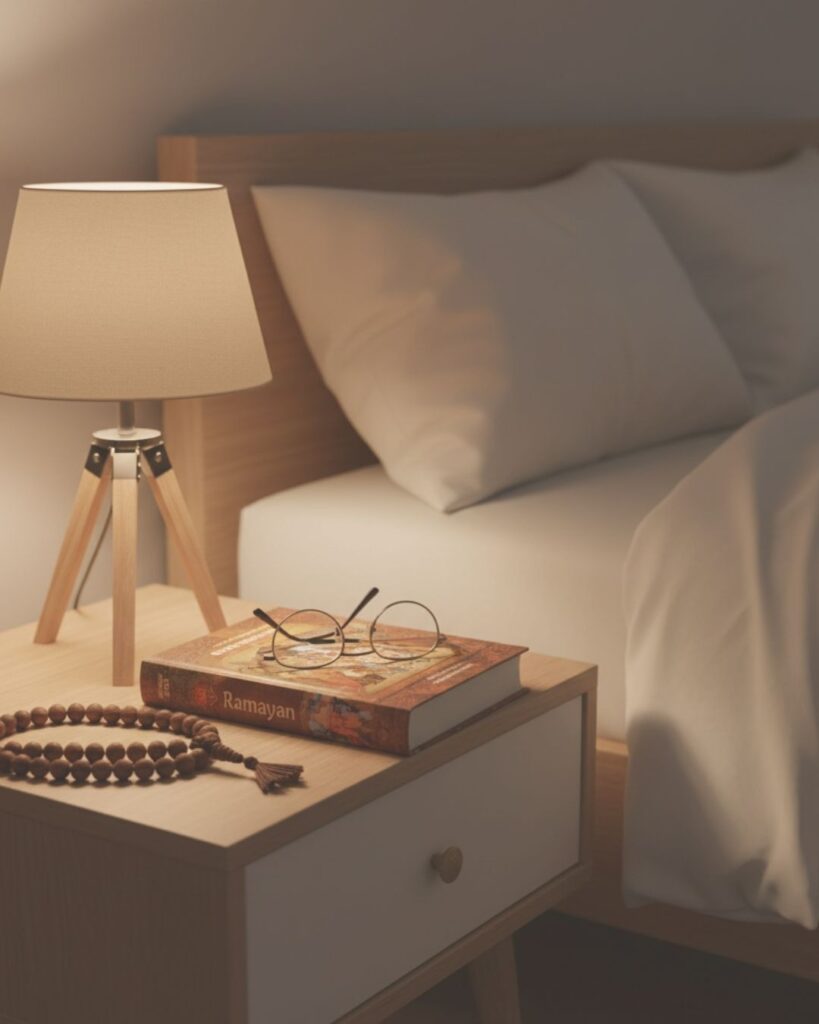
above AI Image: created by and for SRW blogs
🌿 Nana Ji’s Bedside Companions
By his pillow, always rranged neatly, were three things:
- A spiritual book — usually Ramcharitmanas or Bhagwat Gita.
- A thin, old magazine — Kalyan, pages softened by time.
- His most trusted companion — a mala (rosary) of smooth beads. 📿
These weren’t decorations. These were his tools — his way of telling the mind, “I know you want to run wild, but let’s walk in a better direction.”
Whenever Nana Ji woke up, he never allowed himself to fall into the trap of overthinking. He didn’t stare at the ceiling waiting for sleep to return. Instead, he reached for something gentle and purposeful.
🧘♀️ The Magic of the Mala
He once told me, “Mann ko kaam do, warna mann tumhe kaam de dega.” (Give the mind a task, or the mind will give you one.)
So he picked up his mala — each bead sliding through his fingers like a tiny exhale. Slow, rhythmic, grounding.
He was doing it because repetition calmed his nerves. The rhythm distracted the mind from its habit to chat. And slowly, as the beads slipped through his fingers, sleep would return like a shy child inching back into the room. Sometimes, he didn’t even finish five rounds. The body would soften, the breath would slow, and suddenly the mala would be resting beside him again, as sleep reclaimed him. 😴
📖 Reading — Not to Stay Awake, But to Fall Asleep
On other nights, he reached for his books. Not exciting stories that stimulated imagination, but spiritual texts — steady, grounding, familiar. He said reading them was like sitting next to a calm river. You know the story, you are just revising the positivity it has. Your mind follows the flow and gradually loses its grip on the noise inside.
He always chose two types of reading for nights like these:
- Something positive (Ramcharitmanas or Bhagwat Gita)
- Something slightly tiring to the eyes (Kalyan magazine—His favorite)
Within minutes, drowsiness would creep back in.
✨ My Revised Steps: The Wisdom Continues
Today, when I find myself waking up in the middle of the night, I remember Nana Ji’s bedside trio. His lesson was simple: break the cycle of overthinking before it steals the whole night.
I have adjusted his wisdom for my modern life:
- My Mala: A touch on it reminds me I don’t have to let my mind wander. 📿
- My Journaling Diary: If something is bothering me, I write the thought rather than keep beating the bush around it in my head. ✍️
- My Ramayan Copy: A steady, calming read that anchors my thoughts.
- No Phone: I keep my mobile at a distance, forcing me to walk and get it. This automatically keeps me away from scrolling at night, and I check the time on my wrist watch. 📵
-
 above AI Image: created by and for SRW blogs
 - The wisdom remains: If you wake up in the night, don’t let the mind take over. Give it something meaningful, slow, and grounding. And let sleep come back on its own.

🕊️ Conclusion: Guide the Night
Nana Ji’s practice wasn’t complicated or mystical. It was simply a way of saying: “I won’t fight the night… I will guide it.” My copy of Ramayan by Shri Valmiki.
Yes, I try to keep my mobile at a distance so I have to walk and get, this automatically keeps me away from it at night and I check time on my wrist watch. With my tiny bit revised steps, the wisdom remains:
If you wake up in the night, don’t let the mind take over. Give it something meaningful, slow, grounding. And let sleep come back on its own.
✨ Conclusion
Nana ji’s practice wasn’t complicated or mystical. It was simply a way of saying: “I won’t fight the night… I will guide it.”
And maybe that’s the reminder we all need. Whether we use a mala, a book, or a calming ritual of our own — the goal is the same: to gently lead our mind back to peace, and allow sleep to find us again.
A Note from my Heart: ShantiRatan Wellness is a tribute to the living wisdom of my elders. I am not a certified counselor or Ayurvedic practitioner. This practice of keeping a Mala by my bedside is something I inherited from my Nana Ji—a man who lived simply and slept soundly because he knew how to quiet his mind. I share this as a student of his experiential journey. Please listen to your own inner voice and consult professionals for any persistent health or mental wellness needs.
Inherited Insights (The Bedside Rules):
-
The “No-Screen” Zone: Nana Ji’s secret was simple: the Mala and his books sat where the mobile phone sits today. By moving the phone away, you give your mind the space to rest.
-
The Gentle Task: If you wake up at 3 AM, don’t fight the thoughts. Give your fingers the task of the beads, and your breath will naturally follow.
-
The Book Companion: Keeping a sacred or calming book (like Nana Ji’s Ramcharitmanas) nearby provides a “safe harbor” for the mind if it starts to wander too far.
From the SRW Living Library:
-
Next Story: Navel Oiling: The Bedtime Ritual for Full Body Healing (https://shantiratanwellness.com/the-sacred-art-of-nabhi-chikitsa-why-i-oil-my-navel-every-night/)
-
The Library: [Explore our collection of Seasonal Rituals & Household Wisdom] (WWW.ShantiRatanwellness.com)
I’d love to hear from you: Do you have a “bedside companion” that helps you find peace at night? Is it a book, a prayer, or a childhood habit? Share your stories and tips in the comments below—let’s learn from each other!